Fleet redeployments & schedule changes — How to protect your booking
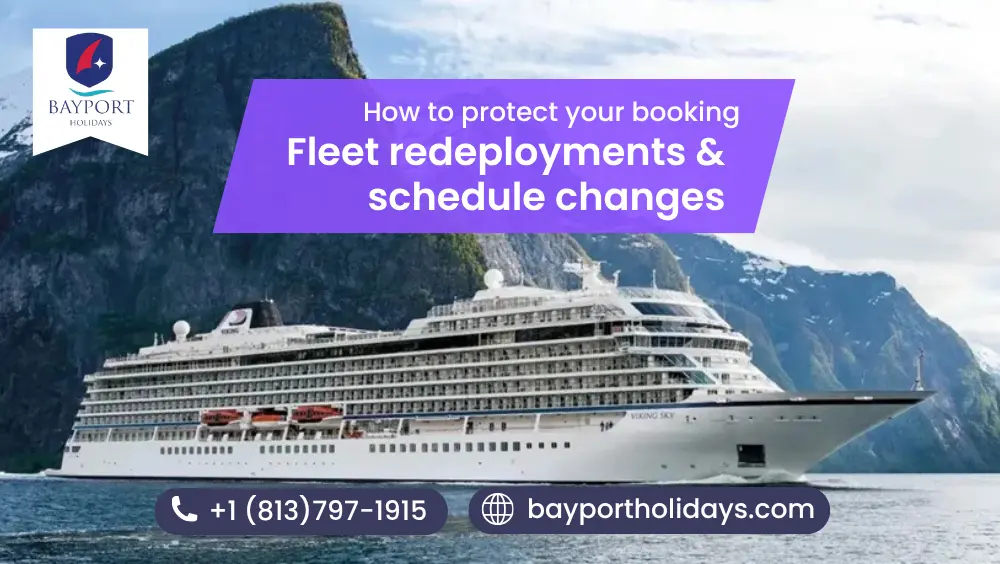
Fleet redeployments & schedule changes — How to protect your booking. When planning a cruise or international trip, most travelers expect smooth sailing. However, fleet redeployments and schedule changes can disrupt even the best-laid plans. These adjustments are common in the travel industry, yet many travelers don’t fully understand how to respond. So, if you want to protect your booking, you need a smart and proactive approach.
In this guide by Bayport Holidays, you’ll learn exactly how to stay ahead, reduce stress, and keep your travel investment safe—even when plans suddenly shift.
What Are Fleet Redeployments?
Fleet redeployments happen when cruise lines or travel providers move ships or assets from one region to another. For example, a ship planned for the Caribbean might get reassigned to Europe due to seasonal demand.
At the same time, schedule changes can include:
- Port cancellations
- Date shifts
- Itinerary updates
- Complete voyage cancellations
While companies try to minimize disruption, changes can still affect your booking unexpectedly.
Why Do Schedule Changes Happen?
Several factors drive these changes. Understanding them helps you stay prepared rather than surprised.
Key Reasons:
- Weather conditions: Hurricanes, storms, or rough seas
- Operational issues: Maintenance or technical problems
- Demand shifts: High demand in different regions
- Regulatory changes: Port restrictions or government policies
- Global events: Economic or geopolitical factors
Therefore, flexibility becomes your biggest asset.
Early Warning Signs You Should Not Ignore
Although changes sometimes come suddenly, there are often early indicators.
- Frequent email updates from your provider
- Small itinerary adjustments
- News about route changes in the industry
- Delays in final confirmations
If you notice these, act early. Waiting can limit your options later.
How to Protect Your Booking Effectively
Now, let’s focus on the most important part—how to protect your booking when changes occur.
1. Choose Flexible Booking Options
Always select fares that allow changes or cancellations. While flexible tickets may cost slightly more, they offer peace of mind.
2. Monitor Your Booking Regularly
Check your booking status frequently. Don’t rely only on emails—log in and verify updates yourself.
3. Act Quickly When Notified
If you receive a change notice, respond immediately. The best alternatives often go fast.
4. Understand Your Rights
Different companies offer different policies. Learn about:
- Refund eligibility
- Rebooking options
- Compensation policies
5. Keep Documentation Ready
Save all confirmations, emails, and receipts. These documents help resolve disputes faster.
Related Post:
» Family Guide: Cruising the Bahamas with Kids
» Last-Minute Bahamas Cruise Deals: How to Save Without Getting Burned
» Baltimore to Bahamas in 7 Nights: Ideal Itinerary + Best Cabins for Sea Days
» Southern Caribbean from Baltimore: How to Plan for Multiple Sea Days + Smart Packing
» Cruise from Seattle: MSC entering Alaska (2026) — what it means for pricing & the onboard vibe
Comparison Table: Flexible vs Non-Flexible Bookings
| Feature | Flexible Booking | Non-Flexible Booking |
|---|---|---|
| Change Fees | Low or None | High |
| Cancellation Refund | Partial/Full | Limited or None |
| Rebooking Options | Wide Range | Restricted |
| Cost | Slightly Higher | Lower |
| Risk Level | Low | High |
Clearly, flexible bookings offer better protection during schedule changes.
Best Time to Book to Avoid Disruptions
Timing plays a key role.
- Book early: More options if changes occur
- Avoid peak uncertainty seasons: Like hurricane months
- Watch industry trends: Redeployments often happen seasonally
As a result, smart timing reduces risk significantly.
Practical Tips for Stress-Free Travel Planning
Even with disruptions, you can still enjoy a smooth experience.
- Stay updated through official channels
- Use travel apps for alerts
- Maintain backup plans
- Avoid tight connections between travel segments
Also, always keep a positive mindset. Travel plans may change, but good preparation keeps things under control.
Real-Life Scenario: What Happens During a Redeployment?
Imagine you booked a Caribbean cruise. Suddenly, the cruise line shifts the ship to Europe.
Now, you might receive:
- A new itinerary offer
- Option to rebook another cruise
- Refund or credit
If you act fast, you can choose the best option instead of settling for what remains.
Common Mistakes Travelers Make
Avoid these errors if you want to truly protect your booking:
- Ignoring notifications
- Booking non-refundable deals blindly
- Waiting too long to respond
- Not reading policy details
- Skipping travel insurance
These mistakes often lead to unnecessary losses.
Role of Travel Insurance
Travel insurance acts as a safety net. It helps cover:
- Trip cancellations
- Delays
- Unexpected disruptions
While it doesn’t solve everything, it reduces financial risks significantly.
Key Facts About Fleet Redeployments
| Factor | Impact Level | Frequency |
|---|---|---|
| Weather Changes | High | Seasonal |
| Demand Shifts | Medium | Frequent |
| Technical Issues | Medium | Occasional |
| Policy Changes | High | Unpredictable |
Understanding these facts helps you prepare better.
Conclusion
Fleet redeployments and schedule changes may seem frustrating. However, they are part of modern travel. The key lies in preparation, flexibility, and quick action.
So, instead of worrying, focus on smart planning. Choose flexible options, stay informed, and act early. That way, you can protect your booking and still enjoy your journey—no matter what changes come your way.
Social:
https://www.pinterest.com/pin/1096626578033549279/
https://x.com/bayportholidays/status/2037418480455340193
https://www.linkedin.com/feed/update/urn:li:share:7443184516459814913/


Comments
Post a Comment